ahead (R) 0.38.1 and its Python wrapper now install in a fraction of the time, by moving almost every heavy modeling dependency from Imports to Suggests and installing them at runtime, only when a function actually needs them.
Spatial machine learning has become a standard tool for producing environmental and geographic prediction maps. It is now relatively (technically) easy to combine field observations with remote sensing, climate, terrain, or other predictor layer...
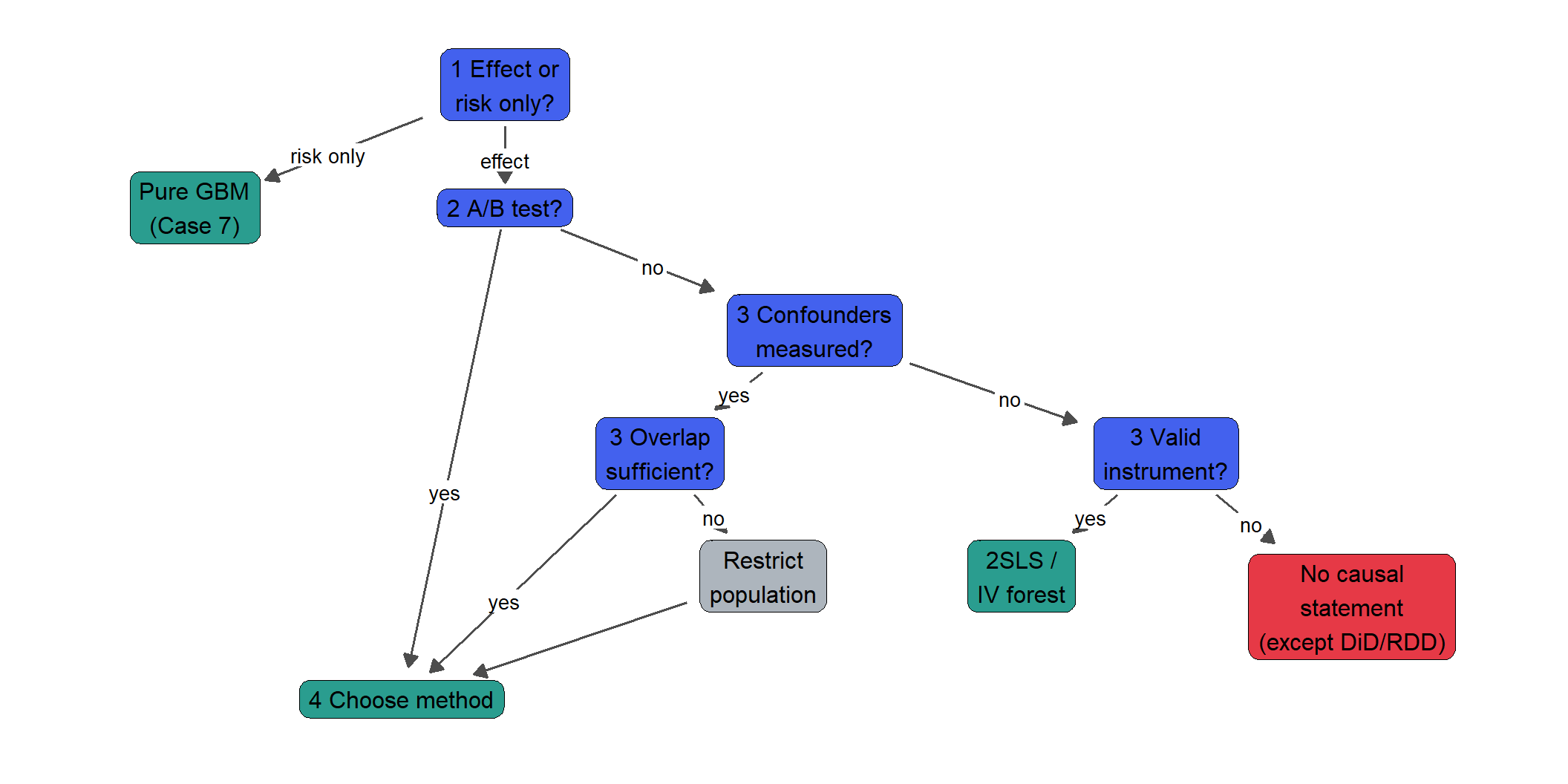
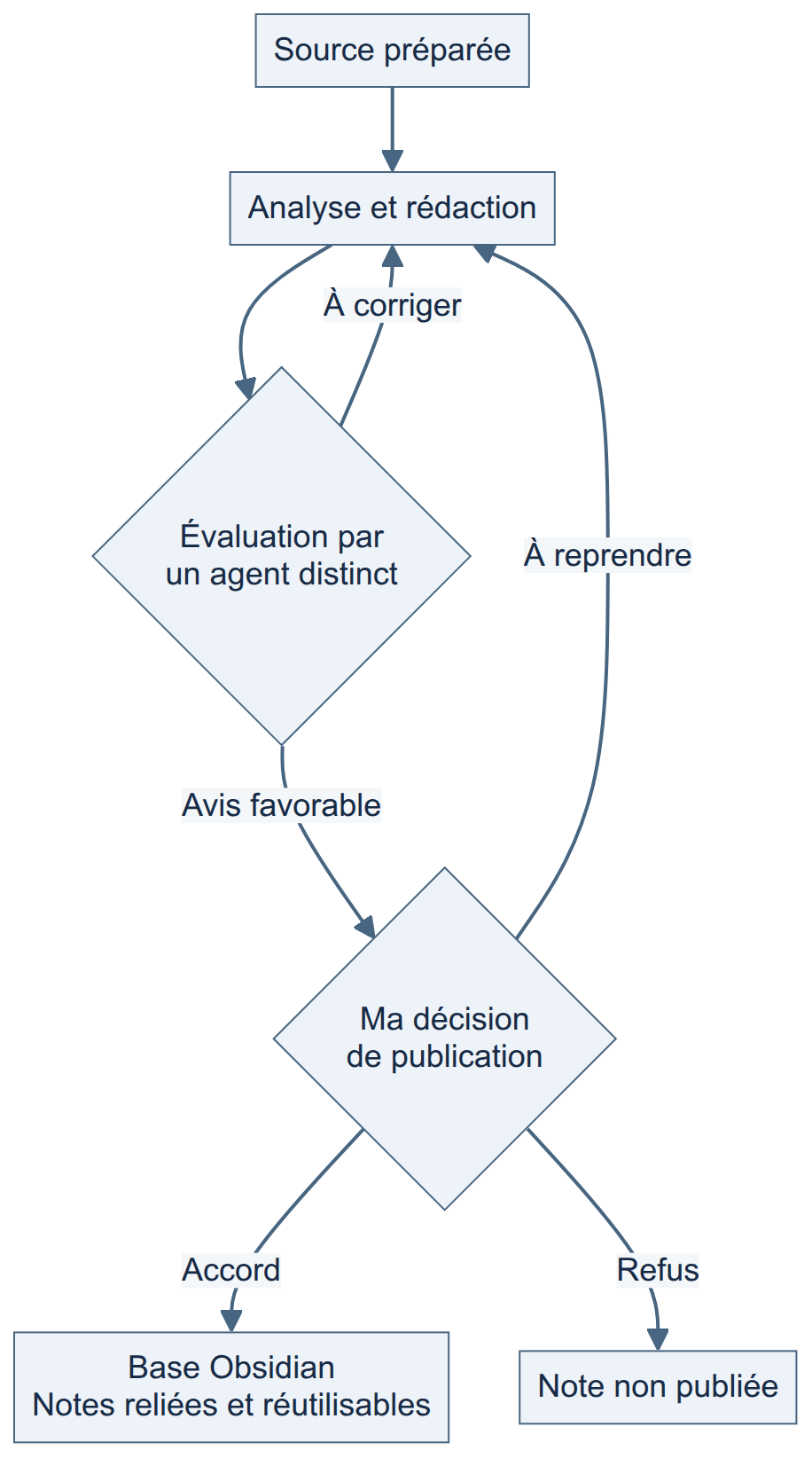
I’m teaching MPTC again this semester and have been developing a few workflow slides. Here’s a popular one.
The Scientific Process.
Now if you’ll excuse me there’s a mandatory webinar I need to click ... [Read more...]
Join our workshop on Visualising High-dimensional Data with R, which is a part of our workshops for Ukraine series! Here’s some more info: Title: Visualising High-dimensional Data with R Date: Thursday, October 1st, 10:00 – 12:00 CEST (Rome, Berlin, Paris timezone) Speaker: Dianne Cook is Professor of Statistics at Monash University in ... [Read more...]
BERT lets you call R functions from Excel cells, but its author stopped work in 2018. Bringing it up to R 4.6 — and to working on every R from 3.5 up — turned up a deadlock that froze Excel and two bugs only the build machine could hide.
The post Bringing BERT — R functions ... [Read more...]
R For SEO Part 10: SEO Reporting With Google Sheets & OpenRouter
Welcome back, and we’re finally at the end of my R for SEO series, at least for now. We’ve gone through quite...
This post was written by Ben Johnston on Ben Johnston
Introduction
The tidyverse verb slice() lets you select observations by position, returning a subset of the data based on integer indices. There are also some related convenience functions, which return observations by:
slice_min() and slice_m... [Read more...]
Complete guide to running one-sample and two-sample Z-tests in R using BSDA::z.test(), the manual pnorm/qnorm method, and how to choose between a Z-test and a t-test for your data.
Read More » [Read more...]
📊 Working through ROC-AUC from scratch, then poking at its blind spots — low prevalence, calibration, and finally Decision Curve Analysis. Mostly notes to myself on what I learned (and got confused by) along the way. 🤔📈
Motivations
We see ROC-AUC so often with classification models, we know the higher the better, but ...
Introduction Portfolio construction often relies on mean–variance optimization or factor models. Yet, recent research highlights the importance of skewness—the third statistical moment—as a driver of asset returns. Assets with lottery-like payoffs (high positive skewness) tend to be overpriced, while negatively skewed assets are often underpriced. A 66‑page ...
Introduction
Data
Aim and hypotheses
Assumptions
Variable type and design
Independence between subjects
Normality
Sphericity
Outliers
Repeated measures ANOVA in R
With the {rstatix} package
With base R
Interpretations
Post-hoc tests
Summary
Ref...
This post estimates potential labor market transition pathways based on the similarity of skills, abilities and knowledge required by occupations. The approach broadly follows Bratanova et al. (2026). Like their research, the considered transition pathways are for workers currently employed as truck drivers. Unlike their approach, we've used a more recent ...
Shiny and Streamlit dashboards depend on a live R or Python process, which makes vanilla deployments slow to load. Observable Framework compiles your data pipeline at build time and ships a static, JavaScript-only site — here's how it works, with a small restaurant-tips dashboard as an example.
I really only wanted to spill some fountain pen ink. Not literally. That would be expensive. 🖋️
I wanted to take colours inspired by Pilot’s Iroshizuku fountain pen inks, drop them somewhere on a blank canvas, and let them flow.
That led me to f...
Zhenguo Zhang's Blog https://fortune9.netlify.app/2026/08/30/r-understanding-position-dodge-and-position-dodge2-in-ggplot2/ -
In ggplot2, when displaying grouped data along categorical axes (such as grouped bar charts, boxplots, or error bars), horiz...
One tiny dataset, another rabbit hole 🐇🕳️
In the previous post, I turned 24 Pilot Iroshizuku fountain pen inks into a tiny shop using ggplot2.
But while sorting the inks by colour, I started wondering what it would look like if I could rearrang...
Three hundred fifty-three new packages were submitted to CRAN in July. Here are my Top 40 picks in nineteen categories: Causal Inference, Chemistry, Climate Studies, Computational Methods, Ecology, Economics, Econometrics, Genomics, Geomorphomet...
Dear rOpenSci friends, it’s time for our monthly news roundup! You can read this post on our blog. Now let’s dive into the activity at and around rOpenSci!
rOpenSci HQ
Champions Program update
Our Champions are making great progress! 🌟... [Read more...]
Naming Things by Tom Benner a tiny but neat book about the naming of identifies in code (variables, classes, methods, so not packages or libraries).
It had entered my to-read list a few years ago, when I read the blog post Naming Things by Vicki Boykis... [Read more...]