

Want to share your content on R-bloggers? click here if you have a blog, or here if you don't.
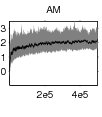


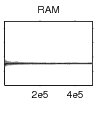
Matti Vihola has posted a new paper on arXiv about adaptive (random walk) Metropolis-Hastings algorithms. The update in the (lower diagonal) scale matrix is

![S_nS_n^text{T}=S_{n-1}left(mathbf{I}_d-eta_n[alpha_n-alpha^star]dfrac{U_nU_n^text{T}}{||U_n||^2}right)S^text{T}_{n-1}](http://l.wordpress.com/latex.php?latex=S_nS_n%5E%5Ctext%7BT%7D=S_%7Bn-1%7D%5Cleft(%5Cmathbf%7BI%7D_d-%5Ceta_n%5B%5Calpha_n-%5Calpha%5E%5Cstar%5D%5Cdfrac%7BU_nU_n%5E%5Ctext%7BT%7D%7D%7B%7C%7CU_n%7C%7C%5E2%7D%5Cright)S%5E%5Ctext%7BT%7D_%7Bn-1%7D&bg=000000&%23038;fg=B0B0B0&%23038;s=0 "S_nS_n^text{T}=S_{n-1}left(mathbf{I}_d-eta_n[alpha_n-alpha^star]dfrac{U_nU_n^text{T}}{||U_n||^2}right)S^text{T}_{n-1}")
where


The spirit of the adaptation is therefore a Robbins-Monro type adaptation of the covariance matrix in the random walk, with a target acceptance rate. It follows the lines Christophe Andrieu and I had drafted in our [most famous!] unpublished paper, Controlled MCMC for optimal sampling. The current paper shows that the fixed point for


&bg=000000&%23038;fg=B0B0B0&%23038;s=0 "f(X_n)")
Ps-Took me at least 15 minutes to spot the error in the above LaTeX formula, ending up with S^text{T}_{n−1}: Copy-pasting from the pdf file had produced an unconventional minus sign in n−1 that was impossible to spot!
Filed under: R, Statistics Tagged: acceptance rate, Adapski, adaptive MCMC methods, controlled MCMC, Grapham, LaTeX, Metropolis-Hastings


R-bloggers.com offers daily e-mail updates about R news and tutorials about learning R and many other topics. Click here if you're looking to post or find an R/data-science job.
Want to share your content on R-bloggers? click here if you have a blog, or here if you don't.